10 Most Economical Cars in Europe (2026), Ranked
Forget WLTP brochure figures. The ten cars that really cost least to run, measured in euros per 100 km at real fuel and electricity prices.

"Economical" is one of the most abused words in car marketing. Every brochure quotes a WLTP figure that you will never see in real life, and "up to X km range" numbers that assume you drive downhill in summer with the air-con off.
So I'm going to do this differently. The only honest measure of how economical a car is comes down to one number: what it costs to move it 100 kilometres, in euros, on the energy prices you actually pay. Not lab figures. Real-world consumption × real EU 2026 prices.
Here are the assumptions I'm using throughout:
- Petrol: €1.70 / litre (EU average, mid-2026)
- Diesel: €1.65 / litre
- Electricity, home charging: €0.28 / kWh
- Electricity, public fast charging: €0.60 / kWh
That last split matters enormously, and most "cheapest EV" lists ignore it. An EV is the cheapest thing on the road if you charge at home and a mediocre deal if you live in a flat and rely on public chargers. I'll flag that for every electric car on the list.
How the ranking works
I rank by real-world cost per 100 km using consumption figures that owners actually report (forums, Spritmonitor, fleet data) — not the official combined figure. Where home and public charging give very different numbers for an EV, I show both.
The top 10
1. Dacia Spring (EV) — €4.00 / 100 km home, €8.40 public

The cheapest car to run in Europe, full stop, if you charge at home. The Spring is slow, basic, and has a small battery — but it's light (under 1,000 kg) and sips about 14 kWh/100 km. At home that's €4 per 100 km. The catch is the small battery makes it a city car; long trips mean public charging where the economics get ordinary.
Buy it if: you do mostly urban miles and can charge at home. Don't if: you regularly drive 300 km in a day.
2. Hyundai Ioniq 6 (EV) — €4.20 / 100 km home, €9.00 public
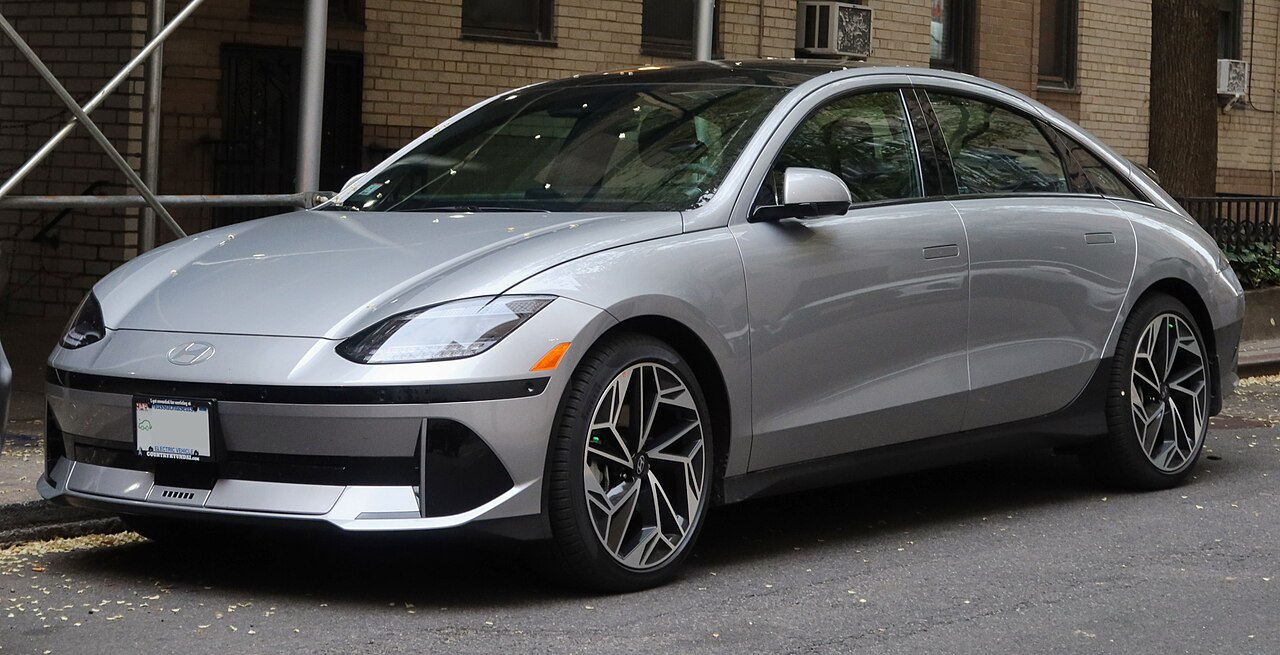
The most genuinely efficient "normal" car you can buy. The aerodynamic body (0.21 drag coefficient) means it uses ~15 kWh/100 km even at motorway speed, where most EVs balloon to 20+. Home charging makes it absurdly cheap to run for a car this size and comfort.
3. Toyota Prius (XW60, 2023+) — €7.10 / 100 km

The hybrid that defined the category, now in its fifth generation and finally good-looking. Real-world economy sits around 4.2 l/100 km — and crucially, that figure barely moves whether you're in town or on the motorway. No plug, no range anxiety, no charging infrastructure required. The plug-in version is even cheaper if you charge it, but the regular hybrid is the no-compromise pick.
4. Toyota Yaris Hybrid — €7.50 / 100 km

The Prius's little sibling and the most economical small petrol-engined car in Europe. ~4.4 l/100 km real-world, supermini practicality, Toyota hybrid reliability (the 2AR/M15 hybrid drivetrains are bulletproof). For people who don't want to think about charging, this is the answer.
5. Peugeot 208 1.5 BlueHDi (diesel) — €6.45 / 100 km

The forgotten economy champion. The 1.5 BlueHDi diesel returns a real ~3.9 l/100 km, which at €1.65/l undercuts most hybrids on pure energy cost. Diesel's death has been overstated for small efficient engines — this one is Euro 6d, clean, and brilliant on a long run.
The asterisk: low-emission-zone restrictions are tightening for diesel in EU cities. Fine for motorway and rural use; check your city's LEZ rules first.
6. Renault Clio E-Tech Hybrid — €7.40 / 100 km

Renault's hybrid system borrows gearbox tech from their F1 program, of all things. ~4.3 l/100 km, and it drives in electric mode around town more than you'd expect. A genuine Yaris Hybrid rival with more French ride comfort.
7. Skoda Octavia 2.0 TDI (diesel) — €8.10 / 100 km

The long-distance value king. You will not find a more economical way to move a family and a full boot 800 km in a day. ~4.9 l/100 km on the motorway from a big, comfortable estate. Diesel torque, huge range per tank, and the cheapest cost-per-km of any proper family car for high-mileage drivers.
If you do 30,000+ km a year, mostly motorway, nothing on this list beats it on total cost.
8. Tesla Model 3 (EV) — €4.50 / 100 km home, €9.60 public

Still one of the most efficient EVs you can buy thanks to years of drivetrain refinement. ~16 kWh/100 km real-world. The home-charging cost is excellent; the Supercharger network makes the public-charge case better than most rivals because Tesla's pricing is often lower than third-party fast chargers.
9. Fiat Panda Hybrid — €8.20 / 100 km

Not the most efficient on paper (~4.8 l/100 km from the 1.0 mild hybrid), but it earns its spot because it's cheap to buy and cheap to insure, which is half of what "economical" really means. The total cost of ownership on a Panda is hard to beat for a city runabout. Sometimes the most economical car is the one that costs €13,000, not the one that uses 0.3 l less.
10. Hyundai i20 1.0 T-GDi (petrol) — €8.30 / 100 km

The pick for people who don't want a hybrid, a diesel, or a plug. ~4.9 l/100 km from the three-cylinder turbo petrol, low purchase price, long warranty (Hyundai's 5-year cover is real money saved). Proof that a well-judged small petrol car is still a sensible economical choice in 2026.
The honest summary table
| Rank | Car | Type | Real l or kWh /100 km | Cost /100 km |
|---|---|---|---|---|
| 1 | Dacia Spring | EV | 14 kWh | €4.00 (home) |
| 2 | Hyundai Ioniq 6 | EV | 15 kWh | €4.20 (home) |
| 3 | Toyota Prius | Hybrid | 4.2 l | €7.10 |
| 4 | Toyota Yaris Hybrid | Hybrid | 4.4 l | €7.50 |
| 5 | Peugeot 208 BlueHDi | Diesel | 3.9 l | €6.45 |
| 6 | Renault Clio E-Tech | Hybrid | 4.3 l | €7.40 |
| 7 | Skoda Octavia 2.0 TDI | Diesel | 4.9 l | €8.10 |
| 8 | Tesla Model 3 | EV | 16 kWh | €4.50 (home) |
| 9 | Fiat Panda Hybrid | Mild hybrid | 4.8 l | €8.20 |
| 10 | Hyundai i20 | Petrol | 4.9 l | €8.30 |
What this list actually tells you
Three takeaways, because the ranking hides the real lesson.
If you can charge at home, an EV wins by a mile. The Spring, Ioniq 6, and Model 3 all run at roughly half the cost-per-km of the best hybrid. Home charging is the single biggest lever on running cost in 2026. If you have a driveway and a wallbox, the question isn't which hybrid — it's which EV.
If you can't charge at home, the hybrid is the smart default. Public charging erases most of the EV advantage. A Prius or Yaris Hybrid costs nothing in infrastructure, never strands you, and the real-world economy is excellent. For flat-dwellers and street-parkers, this is the rational pick, not a compromise.
For high motorway mileage, diesel is still alive. I know it's unfashionable. But if you do 800 km days, the Octavia TDI's combination of low consumption, huge range, and cheap per-km cost is unmatched. Just check the low-emission-zone map for the cities you actually drive into — that's the one thing that can ruin the diesel case.
The wrong way to read this list is "buy number one." The right way is to match the powertrain to how you actually live: home charging, no charging, or high-mileage. Get that right and any of these ten will save you real money.
Want the running-cost and reliability picture for a specific one before you buy? Plug it into the analyzer and it'll factor in mileage, fair price, and known issues.
⚖️ Compare Toyota Corolla vs Volkswagen Golf →Comments
Loading…
Related Articles
Electric Car Maintenance Costs (2026): The Real Math
EVs are cheaper to maintain, but no maintenance is a myth and two costs are quietly higher. The honest line-by-line breakdown.
Used EV vs Petrol: 5-Year Total Cost of Ownership
Over five years an EV and a petrol car diverge across six cost lines. The honest framework, and the two answers that decide which wins.
BMW N47 Timing Chain Problems: The 30-Second Check
The N47's timing chain sits at the back of the engine, behind the gearbox. Which cars are affected, the 30-second check, and what failure costs.